Fulfilling Housing - Partnership with the City of Tallinn, Estonia
Research Methods used:
Stakeholder mapping, Interviews, Survey, Literature review, ZIP analysis, PESTEL
The Project:
Tallinn had ambitious urban goal, but housing affordability was nobody's clear responsibility. Through three phases of research and design, we reframed the problem from a housing supply question into a governance and measurement challenge, and proposed a new strategic field within Tallinn 2035.
Research & Design Journey
Discover
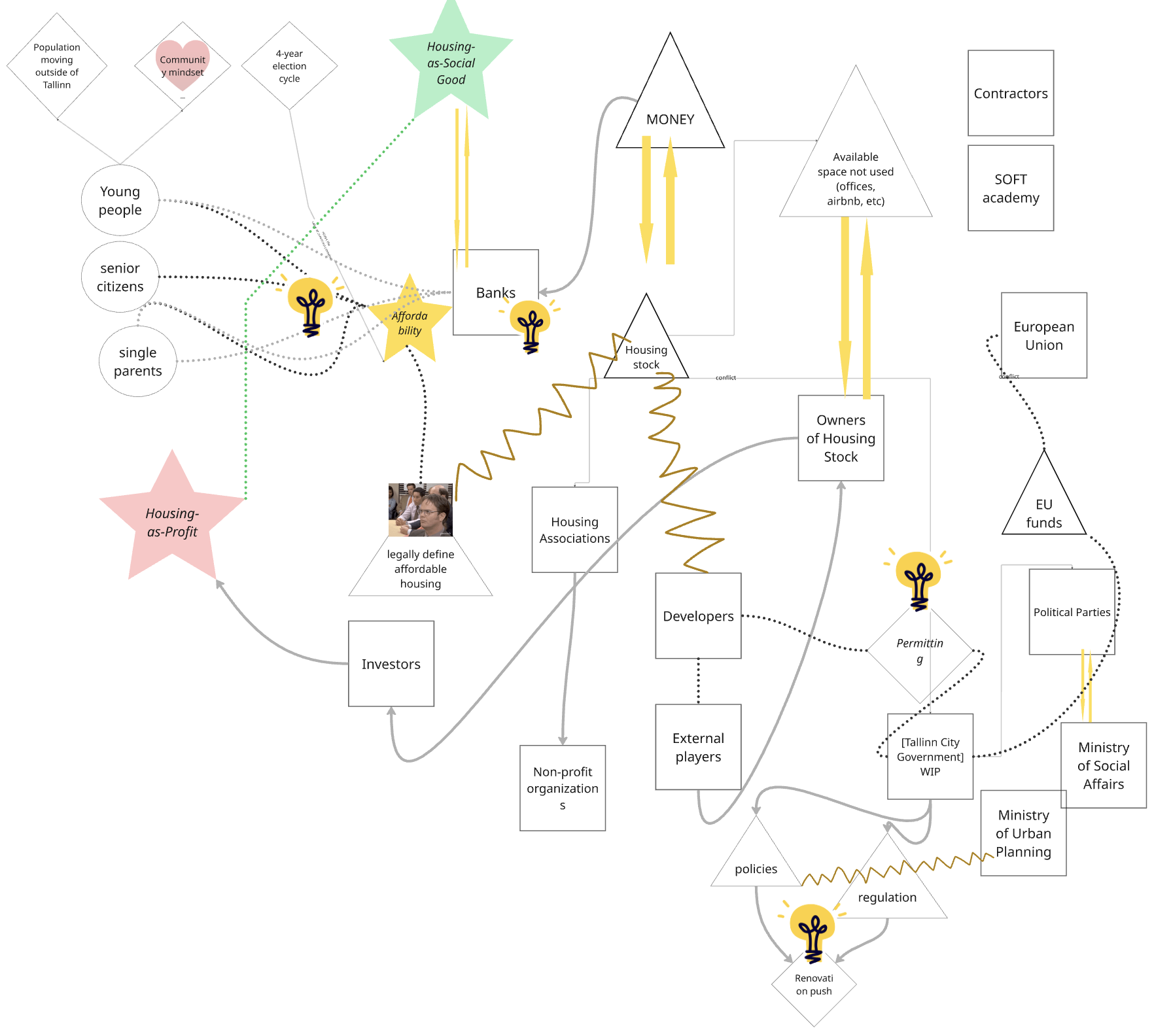
We started by mapping the full system, from national government and EU policy down to individual residents. Tallinn's housing problem sat across macro, meso, and micro levels, with weak links between them.
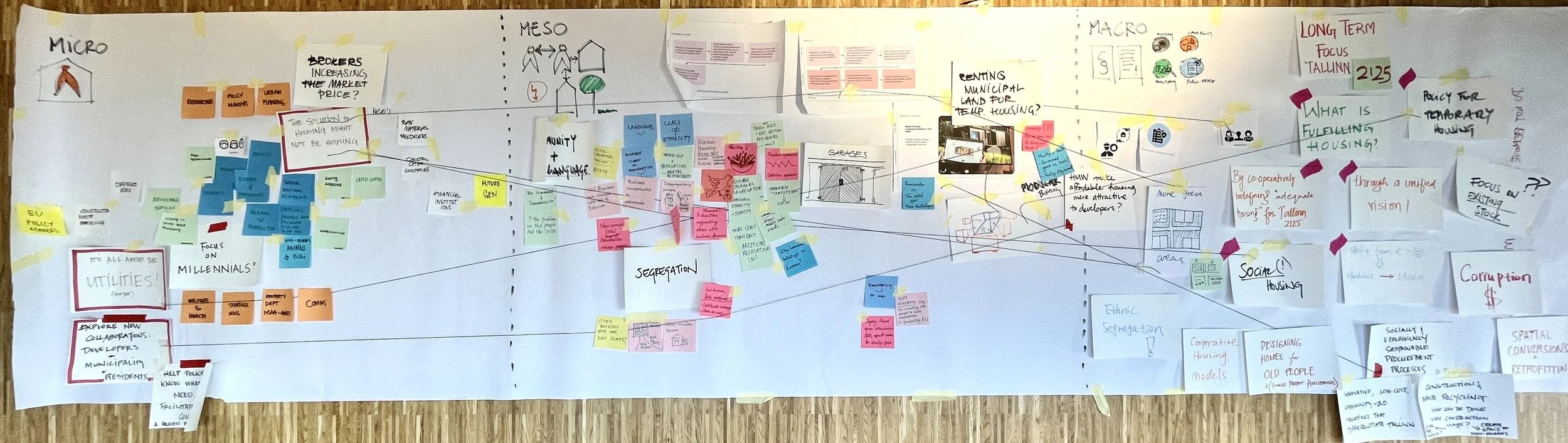
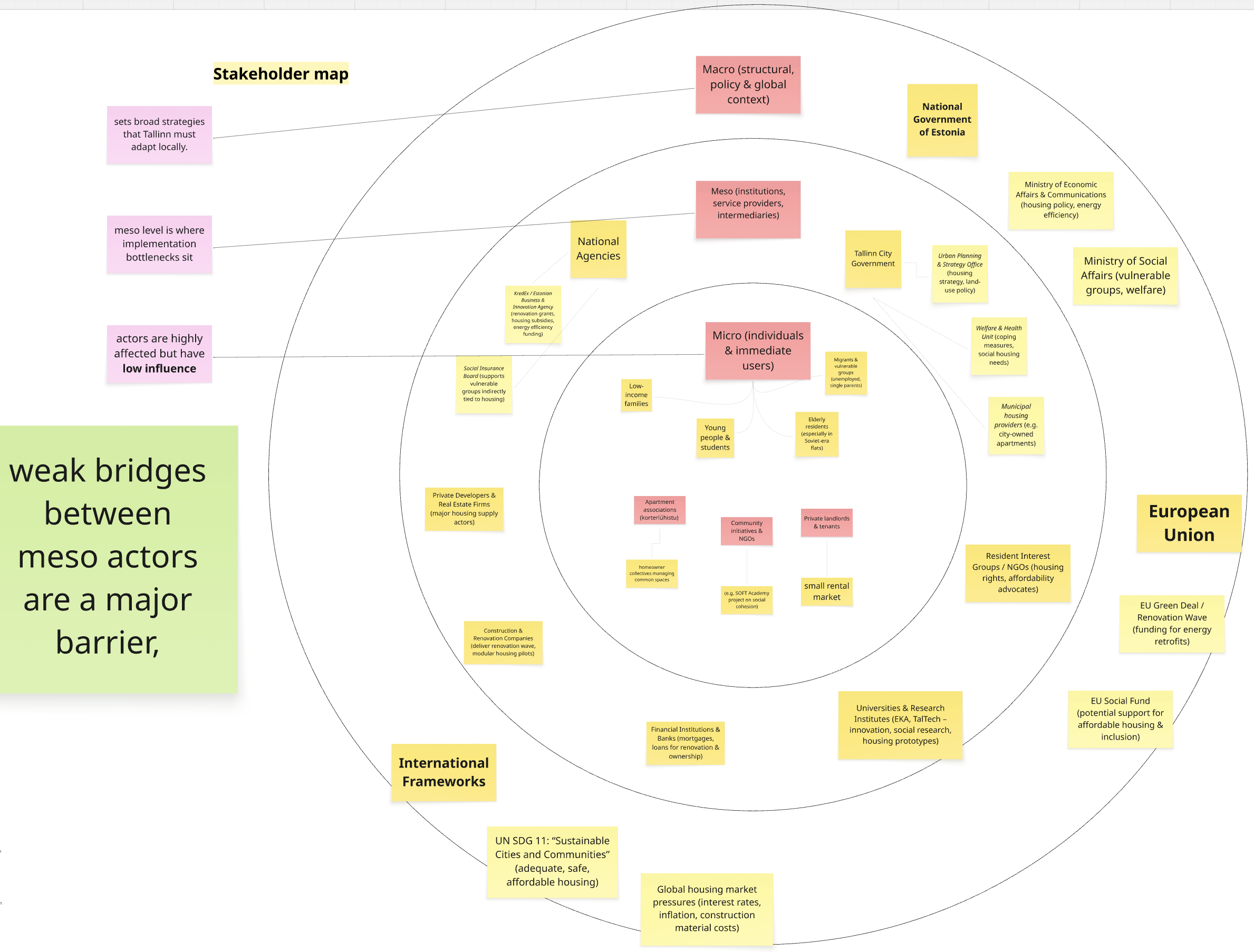
Early research sessions mapped the full complexity of the system, tracing connections between EU policy, city departments, developers, housing associations, and residents.
Industry Sector:
Public Sector / Urban Policy
Team:
5 team members
Timeframe:
4 months
My Role:
Service Designer (Policy research, Synthesis, Strategic reframing, Framework development)
Research
We conducted field visits across six Tallinn neighbourhoods and interviewed residents, city welfare officers, a real estate developer, and local students. We also analysed Tallinn 2035, EU housing frameworks, and Estonian constitutional law.
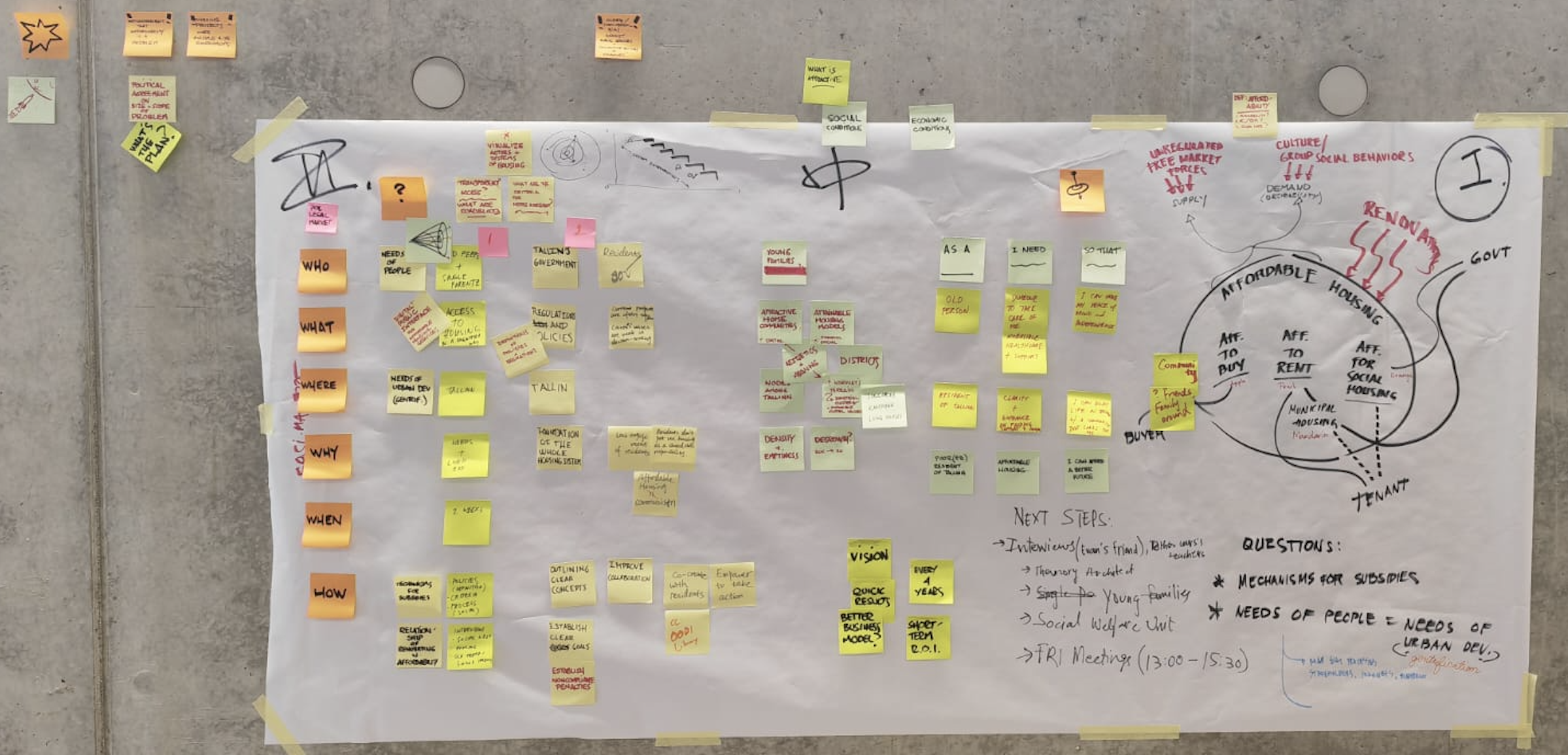
Three stakeholder groups, three completely different problem definitions. Citizens wanted rent regulation and more public responsibility. The welfare unit identified a critical gap: people leaving social housing faced a 400–600% jump to enter the private market. Developers argued affordability was a regulatory and cost issue, not a market failure.
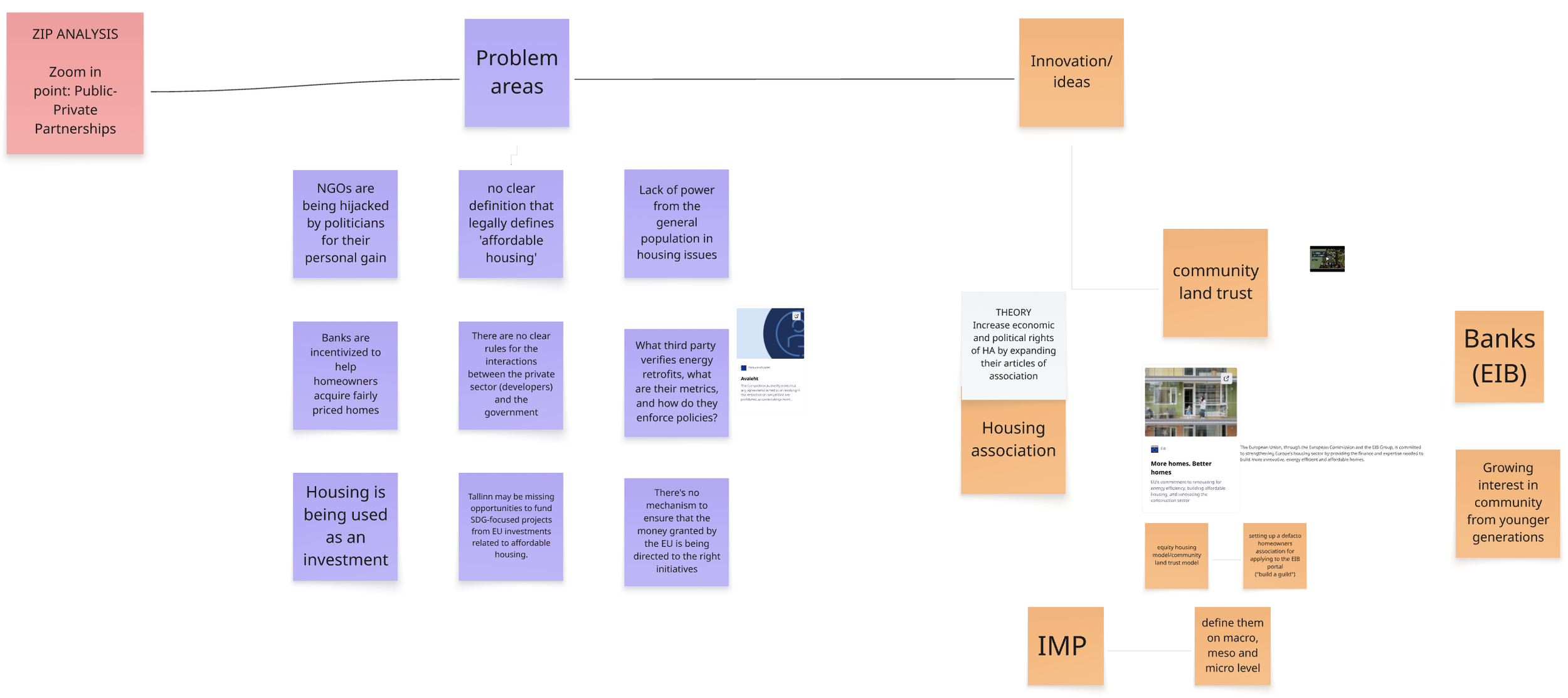
A ZIP analysis helped us map problem areas and innovation opportunities, particularly around public-private partnerships, legal definitions of affordable housing, and the absence of resident power in policy decisions.
✨ My contribution:
I contributed to interview analysis and synthesis, and played a central role in identifying the gap between Tallinn's strategic vision, EU frameworks, and residents' lived realities.
The system was pulled in two directions: housing as a social good versus housing as profit. Affordability had no shared definition, no measurable standard, and no clear owner. Everyone agreed it was breaking, but no one shared the same tools to fix it.
Our research question became: How might Tallinn integrate fulfilling and affordable housing into its long-term strategic vision to create shared, measurable standards so all actors work toward the same goals?
✨ My contribution:
I helped move the team from a list of possible interventions (labour bank, community land trust, rental caps, tax reform) toward a coherent systems-level proposal. The reframe from supply to governance was central to that shift.
Reframe
The key insight that shifted our direction: this was not a housing supply problem. It was a governance and measurement problem.
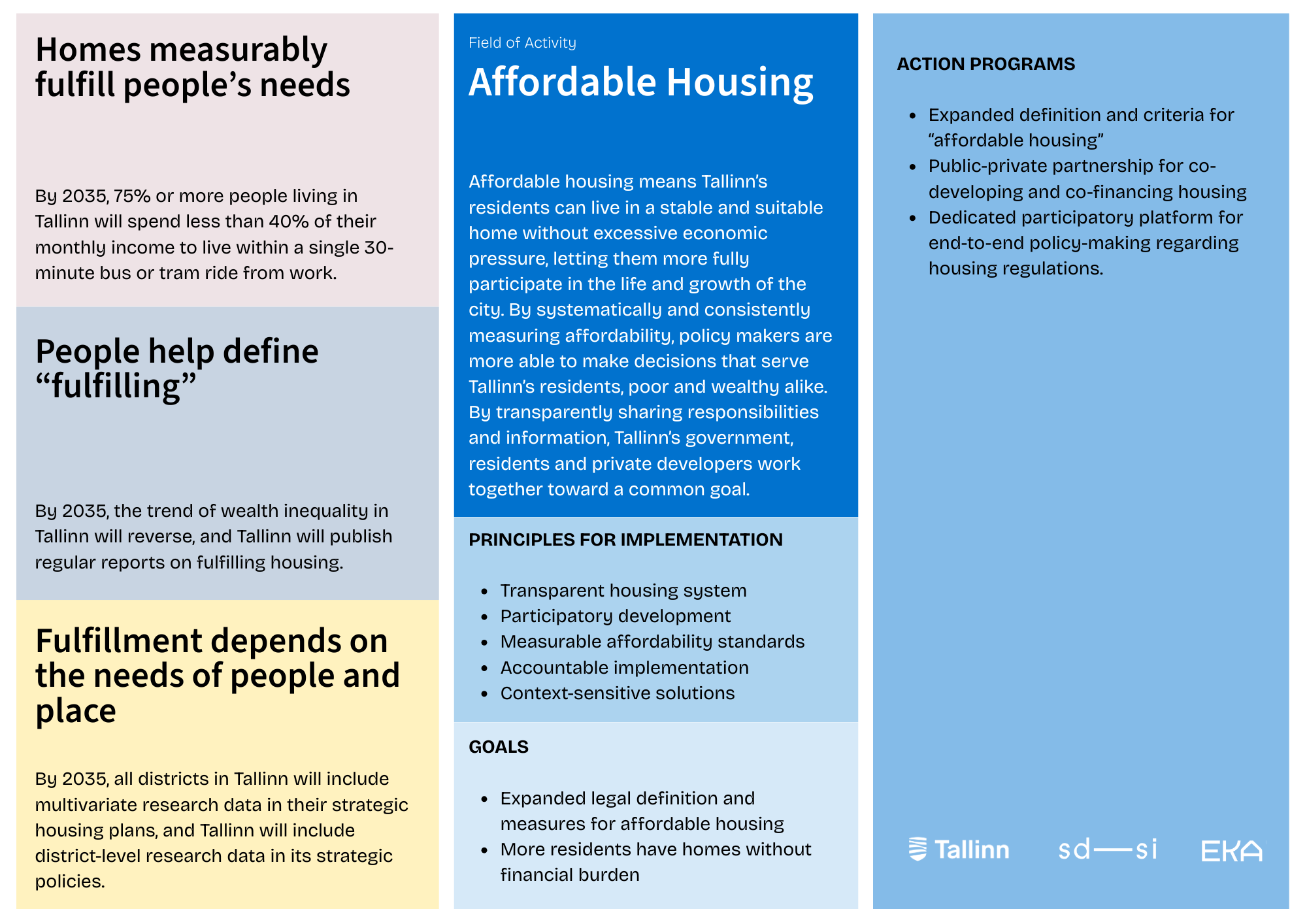
Rather than designing housing units or writing a single law, we designed the conditions for better decision-making:a policy-support framework that helps Tallinn define, measure, and implement housing affordability across departments and political cycles.
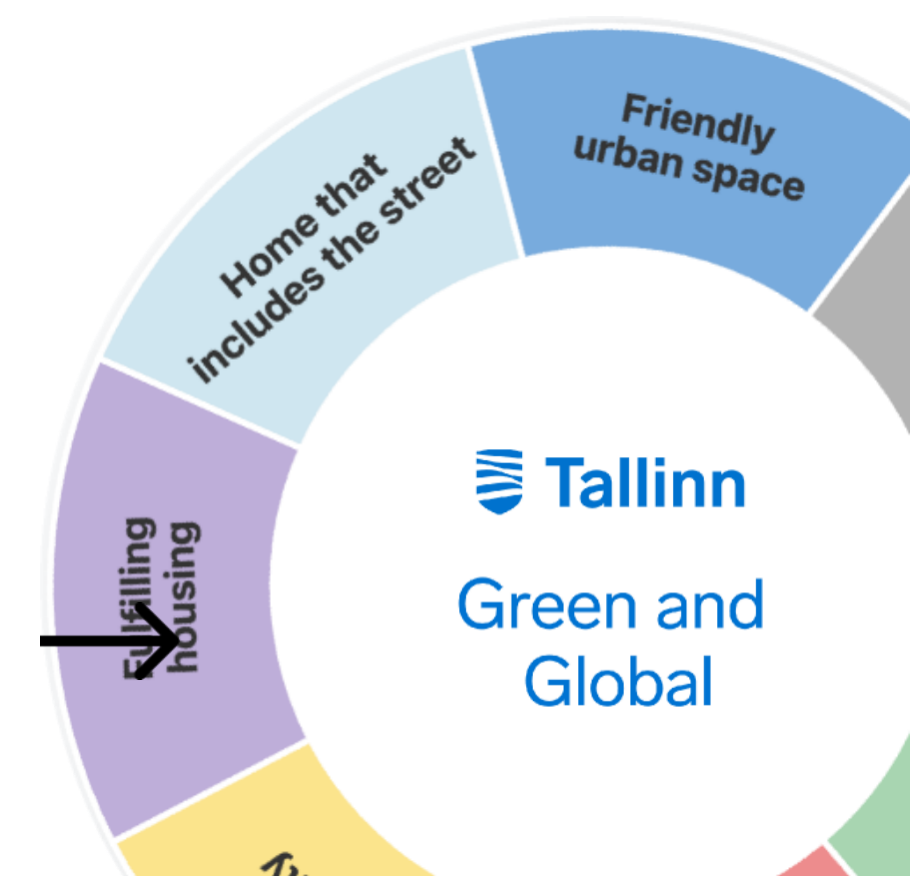
Our output was a mocked-up addition to the Tallinn 2035 website: Strategic Goal 7 — Fulfilling Housing, supported by a new Field of Activity: Affordable Housing.
The framework included five principles, measurable markers, and three action programmes, giving the strategy operational teeth it previously lacked.
Showcasing Website : https://chart-tomato-05476564.figma.site/
✨ My contribution:
I contributed to developing the Fulfilling Housing concept, writing and refining the principles, goals, and action programmes, and translating complex policy analysis into clear, website-ready content for decision-makers.
Develop & Deliver
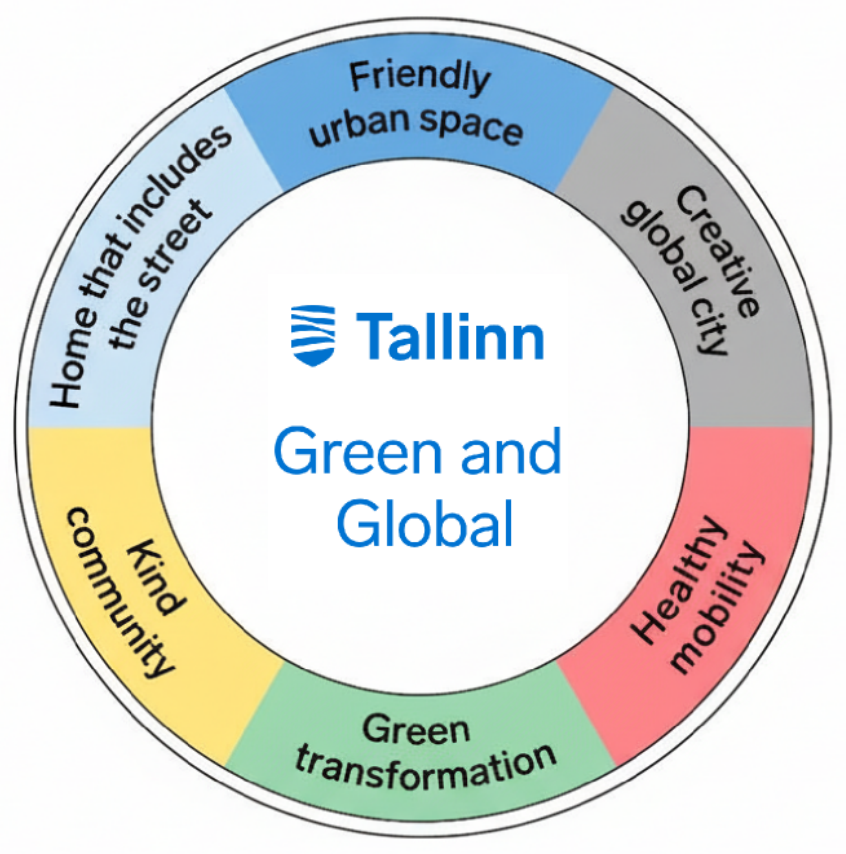
Tallinn 2035 already had six strategic goals. We proposed adding a seventh.
Current
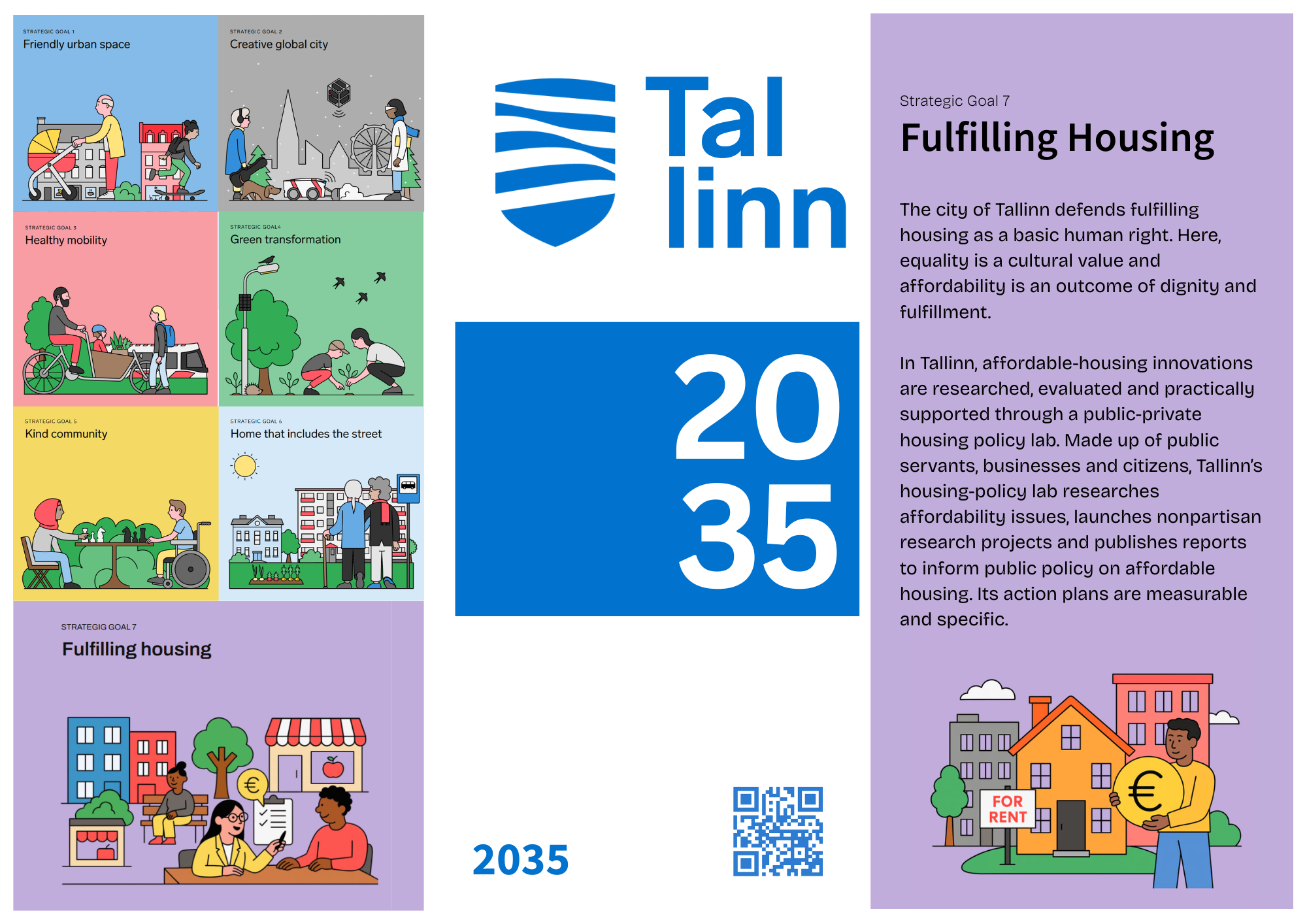
Our proposal
This project taught me that the hardest design problems are not about what to build, they are about creating the conditions for better decisions. Working at a policy level meant navigating political sensitivity, departmental silos, and long time horizons that don't have neat design solutions.
The most valuable skill I practised here was strategic reframing: helping a team move from scattered ideas toward a coherent systems-level proposal. Making complex governance issues legible to stakeholders is something I want to keep developing.