Career Talks
Industry Sector:
Social/NGO
Team:
5 team members
Tools:
Figma, Notion, Miro, Adobe
Timeframe:
4 months
Research methods used:
Desk research, Interview, Survey, Workshop, User Journey Mapping
My Role:
Service Designer (Research, Co-design workshops, Prototyping and Testing)
The project:
Collaborated with European Movement Latvia. Aiming to boost youth civic participation in Kuldīga, we uncovered a deeper challenge: the fear of an uncertain future. Through research and collaboration with students and mentors, we created Career Talks, a mentorship program designed to bridge the gap between young people and their aspirations, empowering them with the confidence to shape their futures.
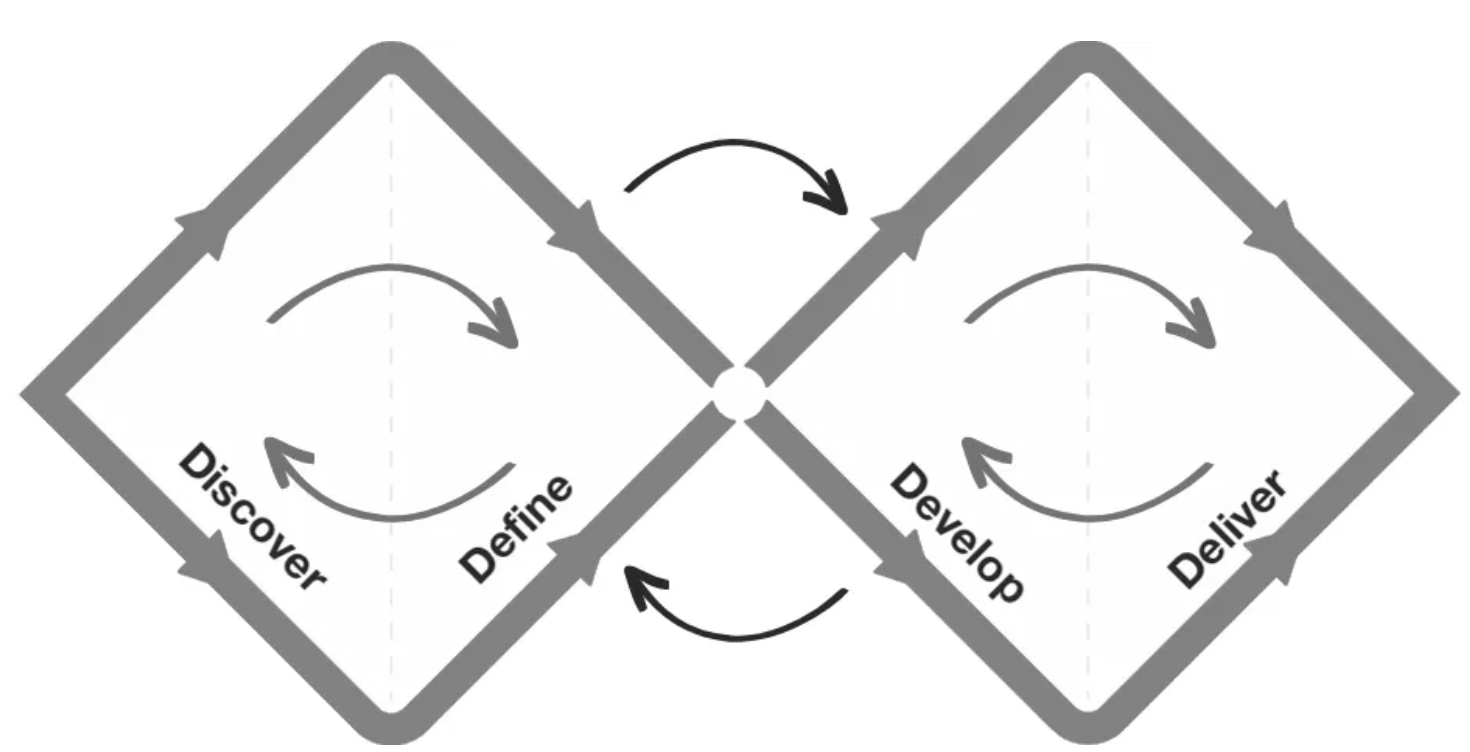
The framework we used:
Double Dimond
Our team decided to focus on our local area Kuldīga.
We interviewed a total of 7 people aged between 17 and 23, and came up with our first HMW based on the results: How might we help improve the prospects of Kuldīgas youth?
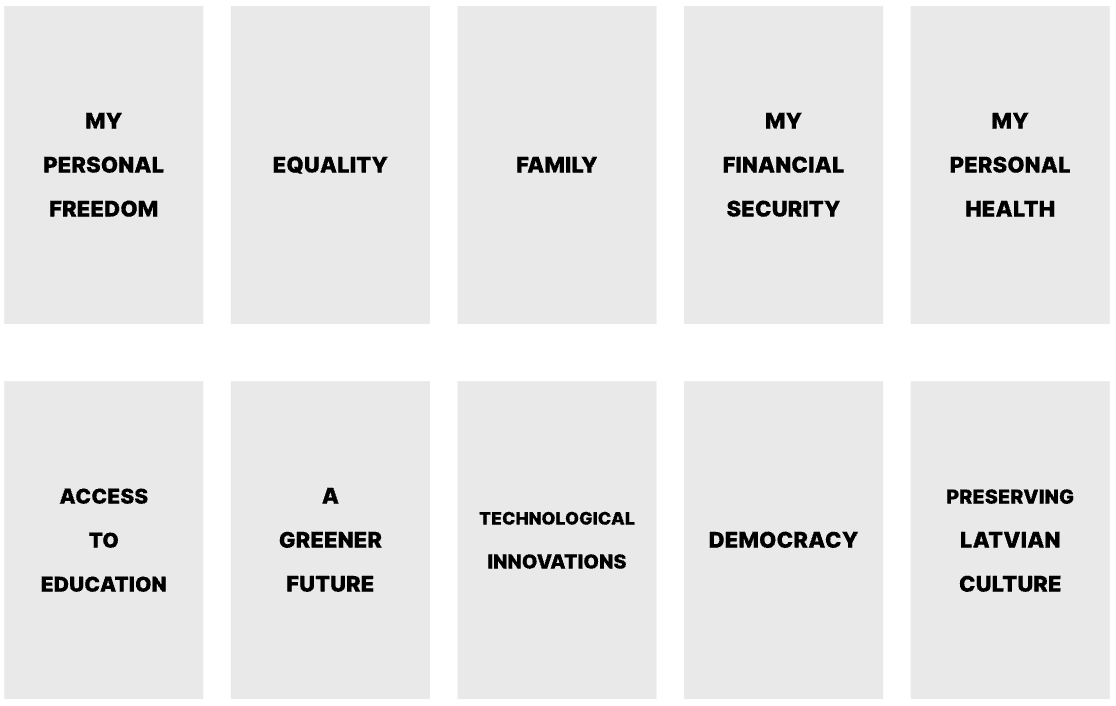
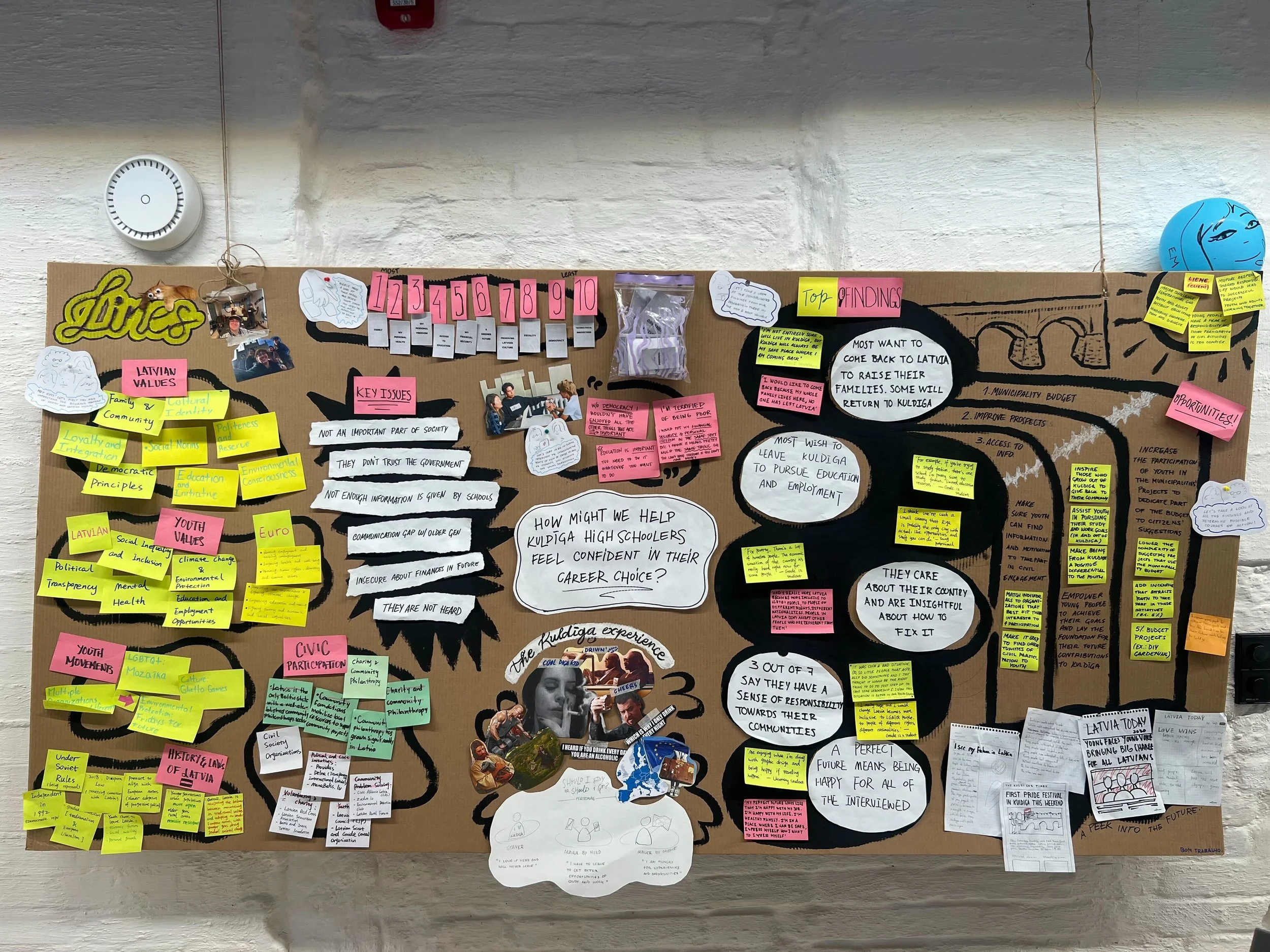
During the Card Sorting exercise with them, we were able to list their top values, as seen on the left.
The top 5 values were: Family, Personal health, Personal freedom, Access to education and financial security
The bottom 5 values were: A greener future, Preserving Latvian culture, Equality, Democracy, and Technological innovations
Research and Interview Top Insights:
Most youth want to come back to Latvia to raise their families. Some will return to Kuldīga.
Most youth wish to leave Kuldīga to pursue education and employment.
They care about Latvia and are insightful about how to fix it.
3 out of 7 said they have a sense of responsibility towards their communities.
A perfect future means being happy for all of the youth we interviewed.
Workshop
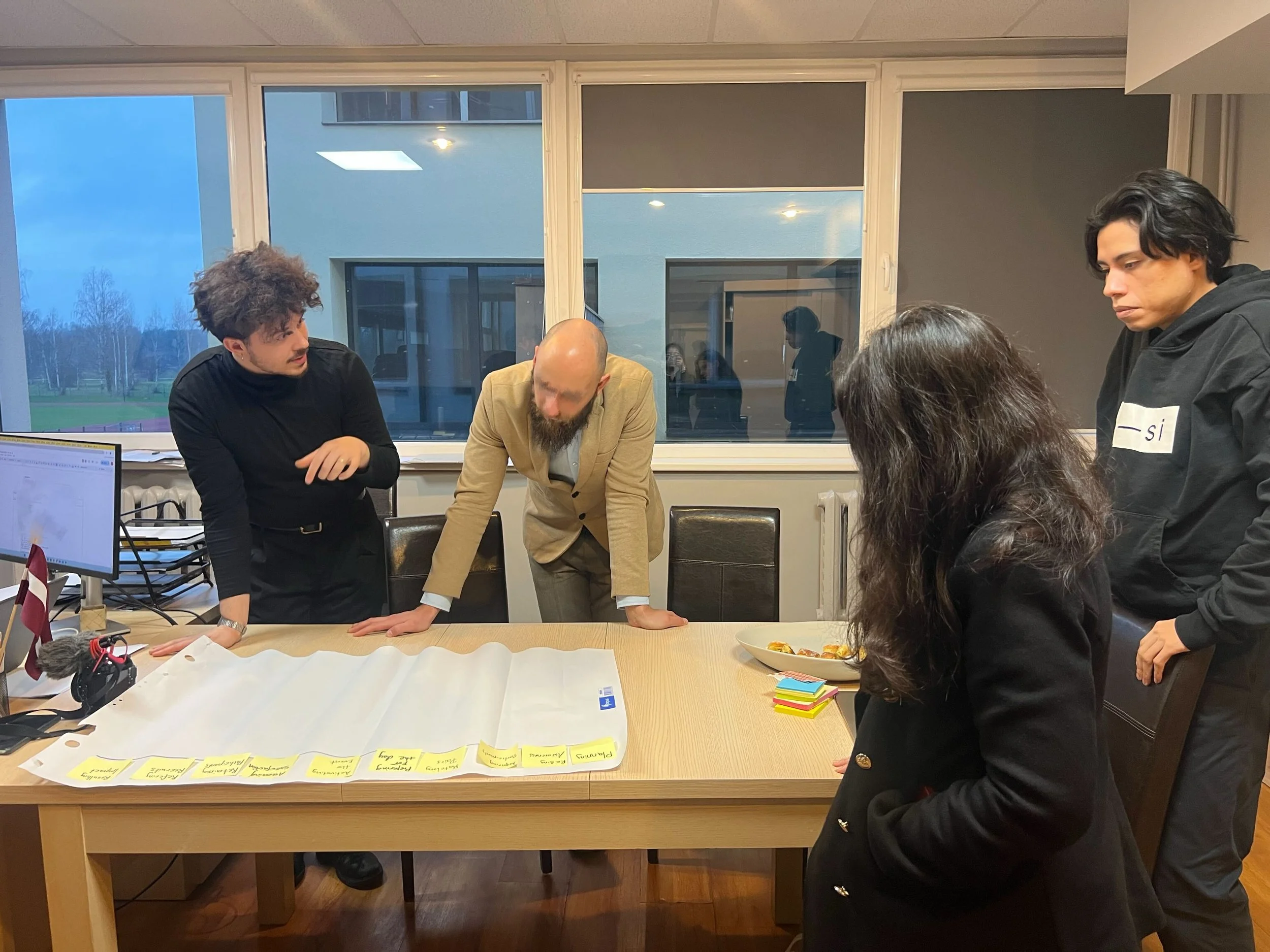
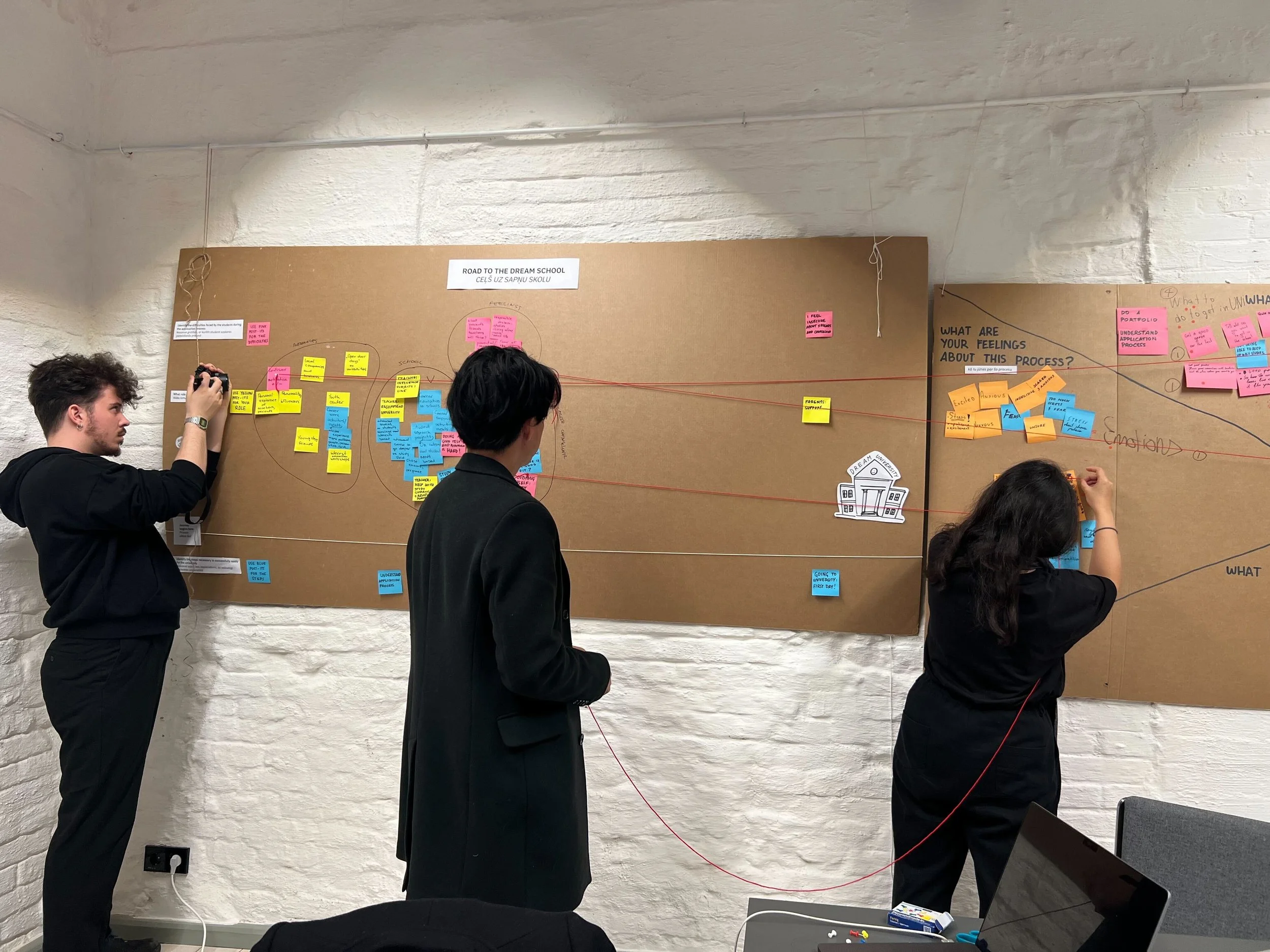
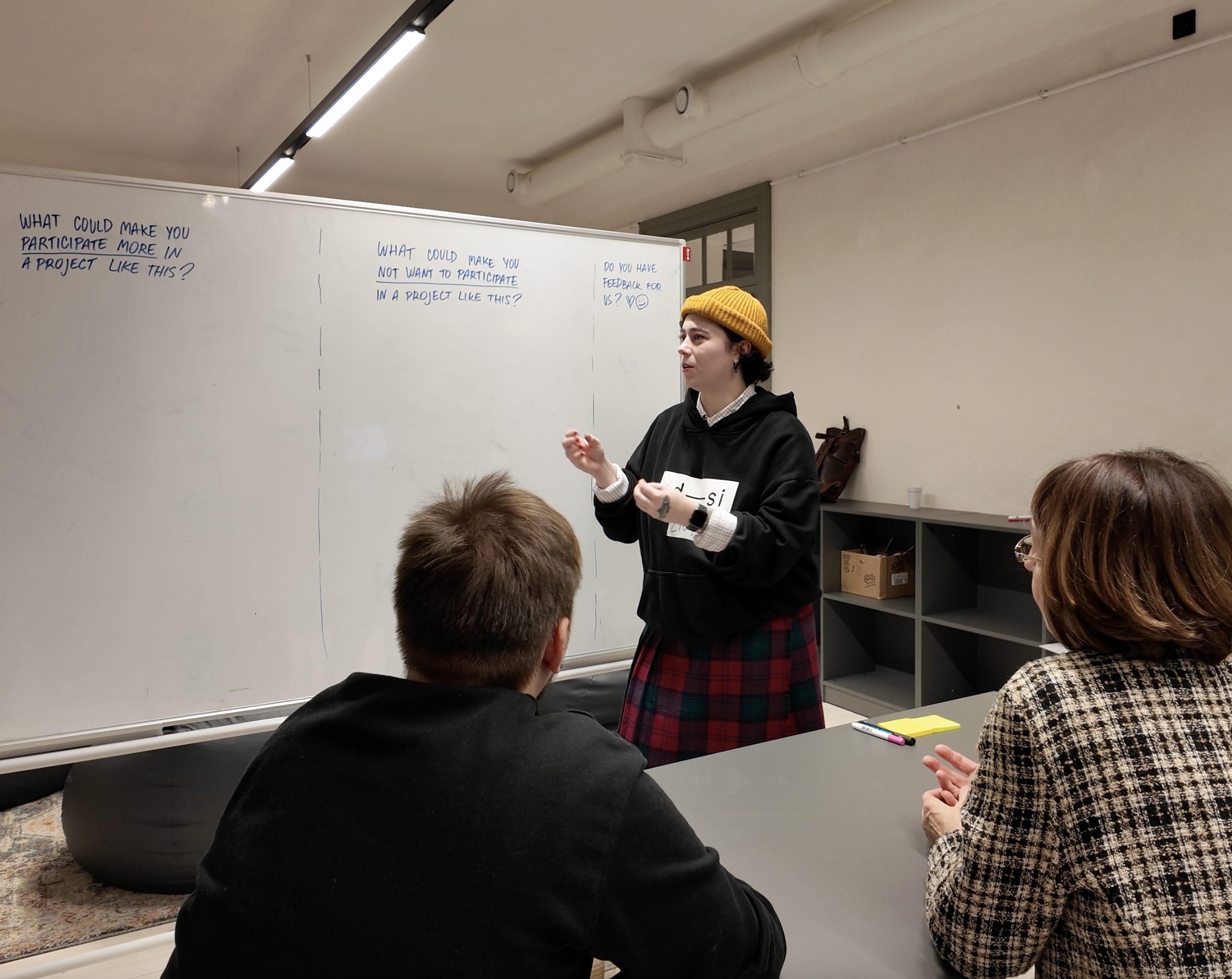
The workshop aimed to explore how high school students in Kuldīga feel about pursuing their dream careers and universities, focusing on identifying and addressing their biggest challenges. We also sought to validate our research insights, gather new data, and refine our modified "How Might We" statement, which was How might we help Kuldīga high school students get into their dream art/design universities on scholarships?
We invited eight students interested in creative industries, one career counsellor, and one art teachers for our workshop to explore students’ perspectives on their journeys and discuss support systems, portfolio preparation, and art school admission requirements.
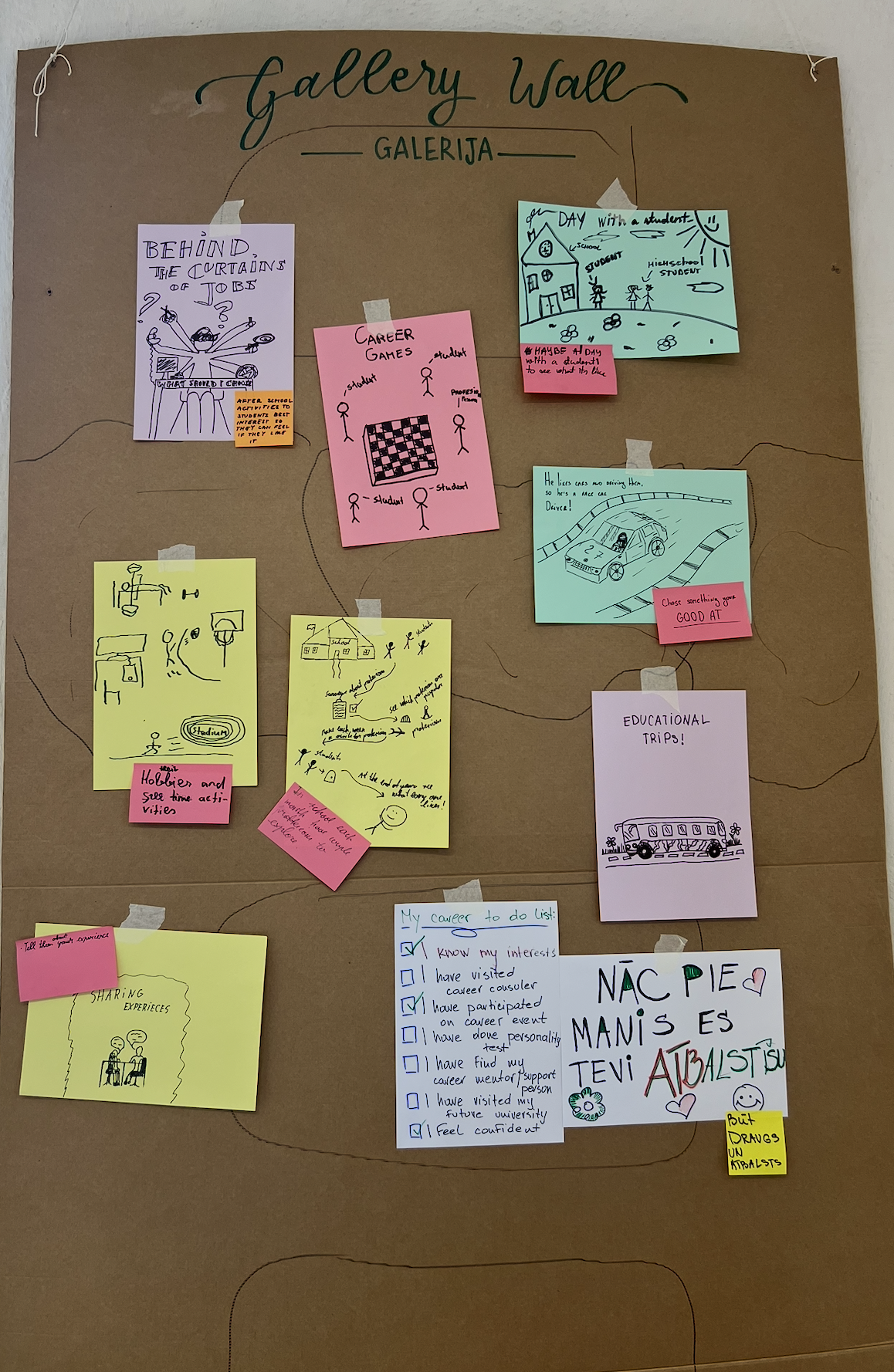
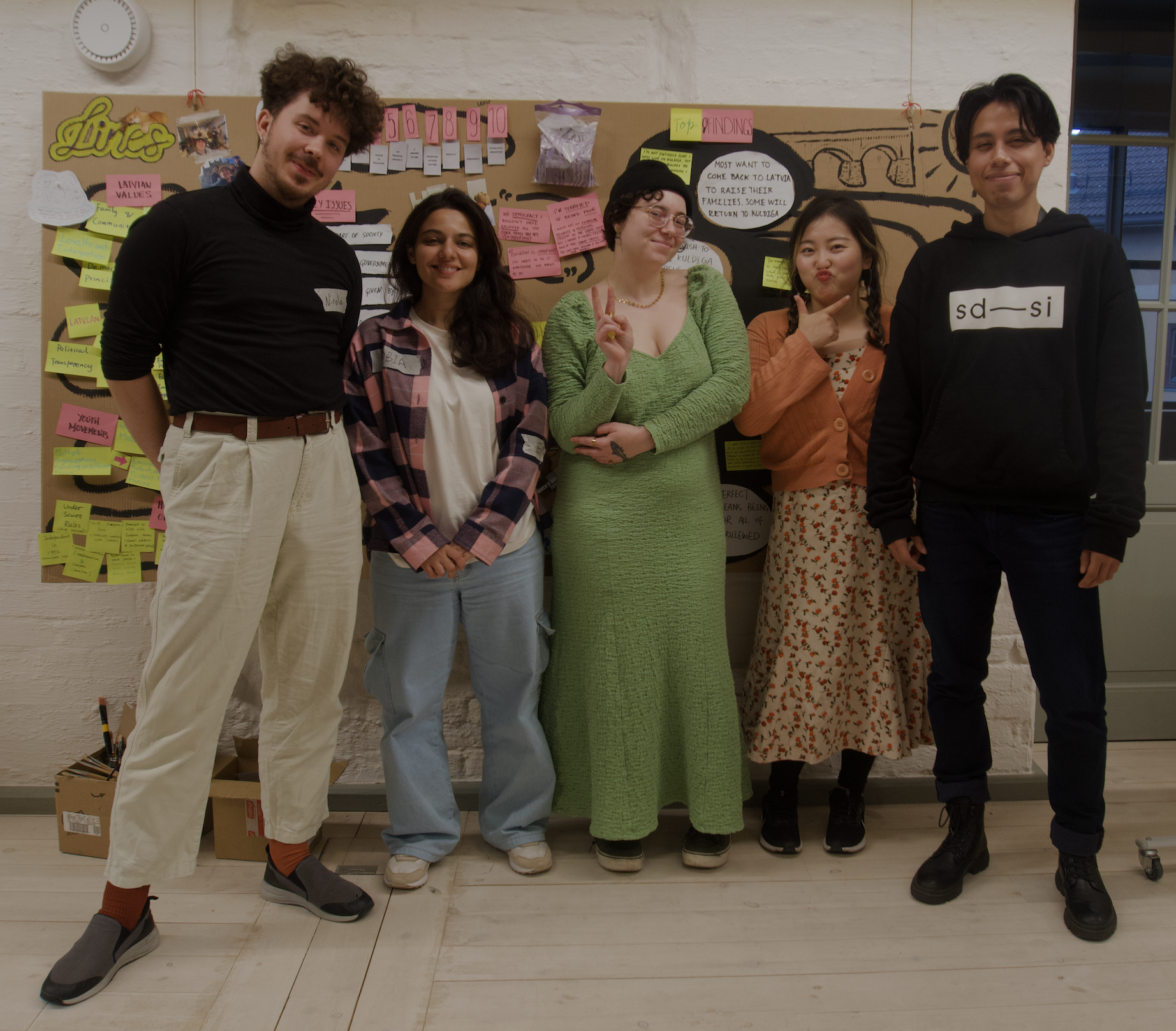
Final Research Wall
Design Journey
The initial challenge presented to our team was: youth civic participation in Latvia, was strikingly low. At first glance, the problem seemed rooted in apathy or a lack of interest among young people. However, as we delved deeper into research and community engagement, our project shifted focus from civic participation to addressing the root cause: empowering youth to overcome their fears about the future.
1. Discover & Define
Secondary Research and Interview
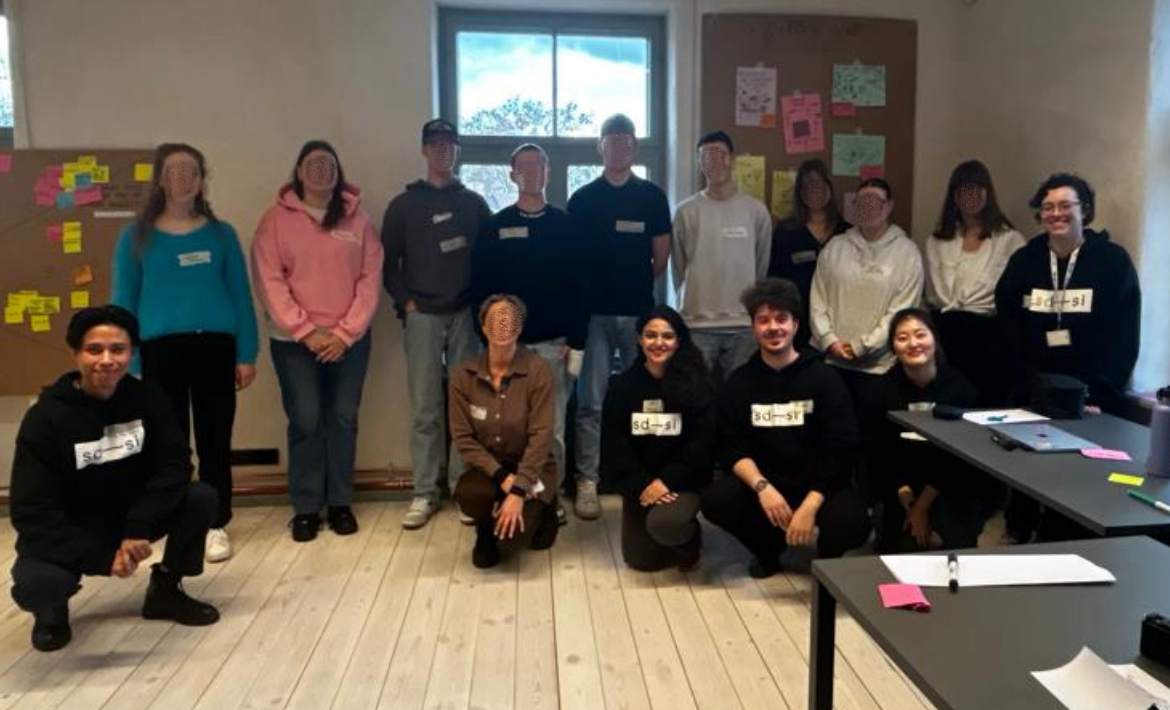
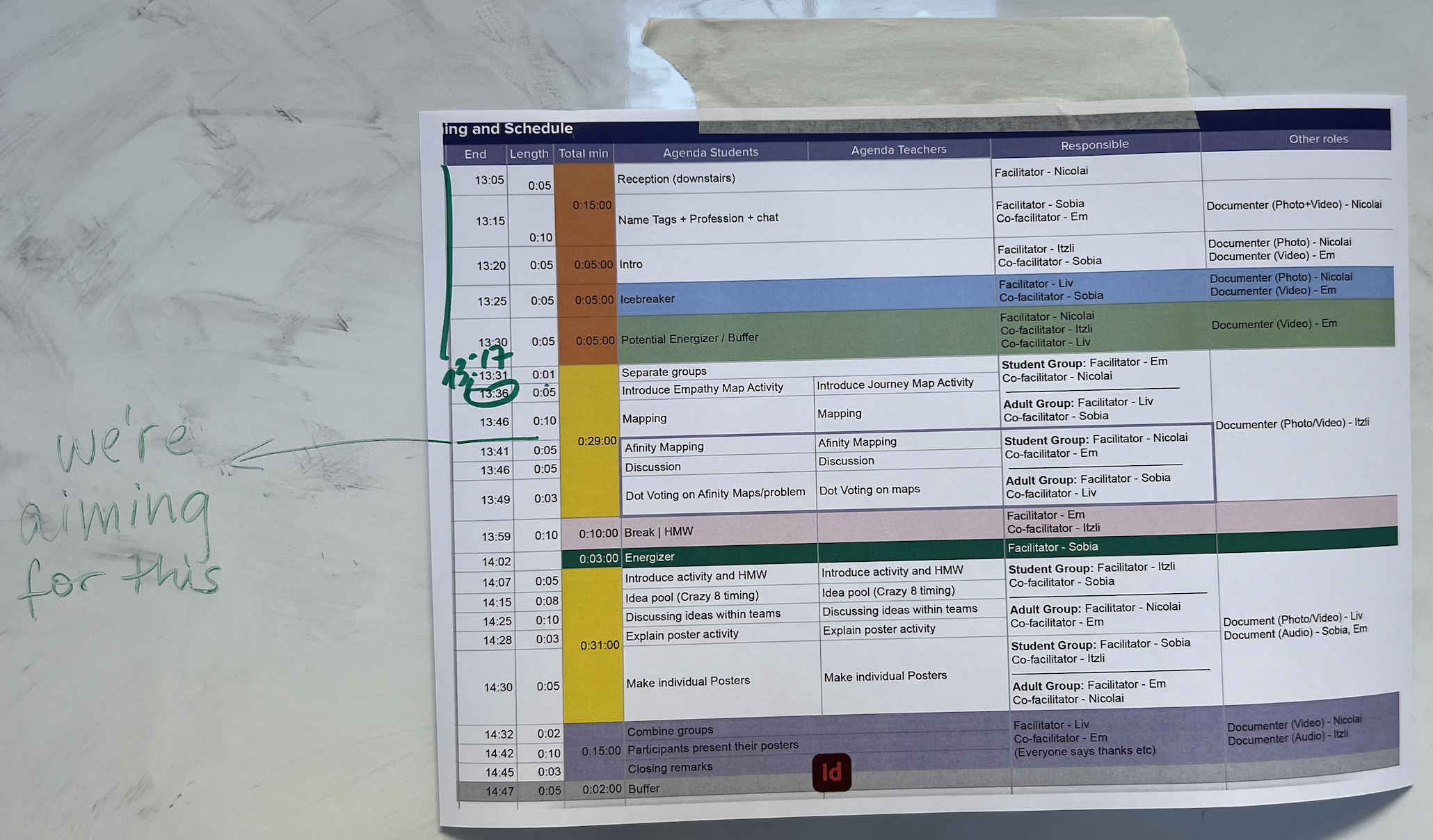
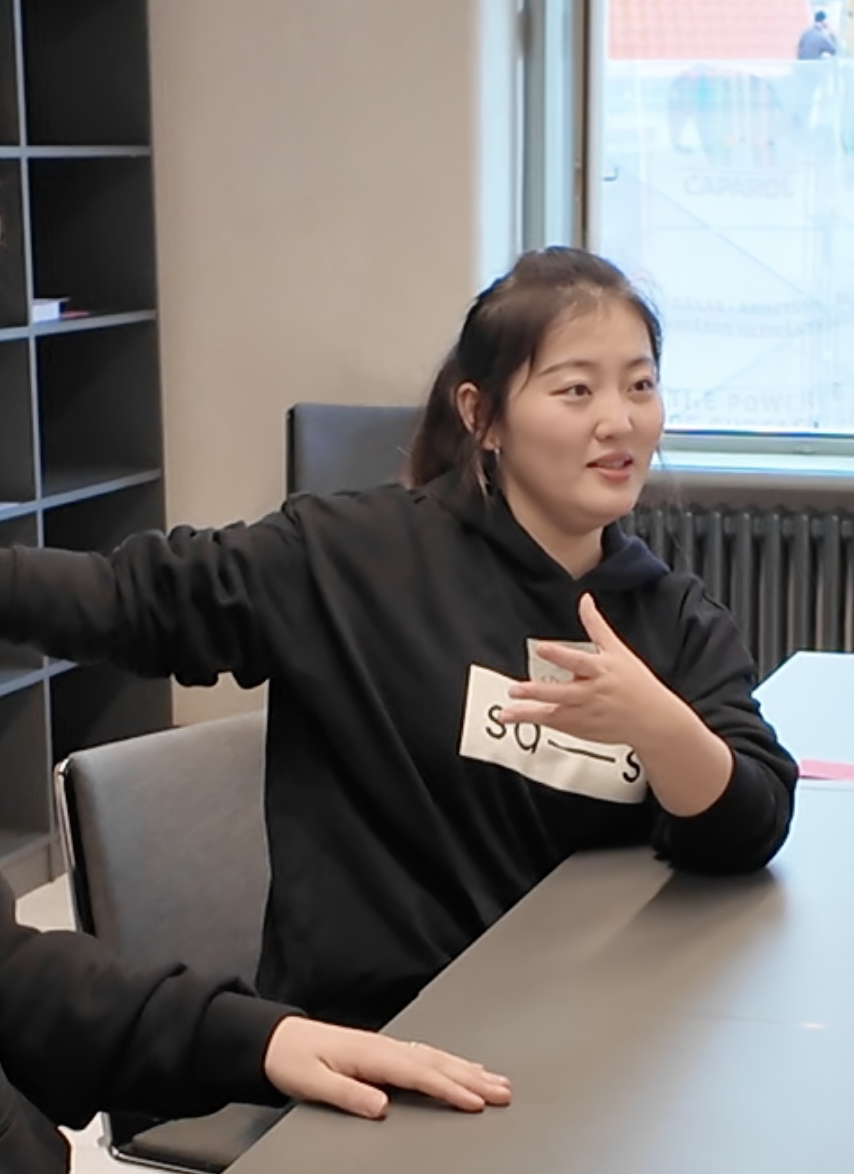
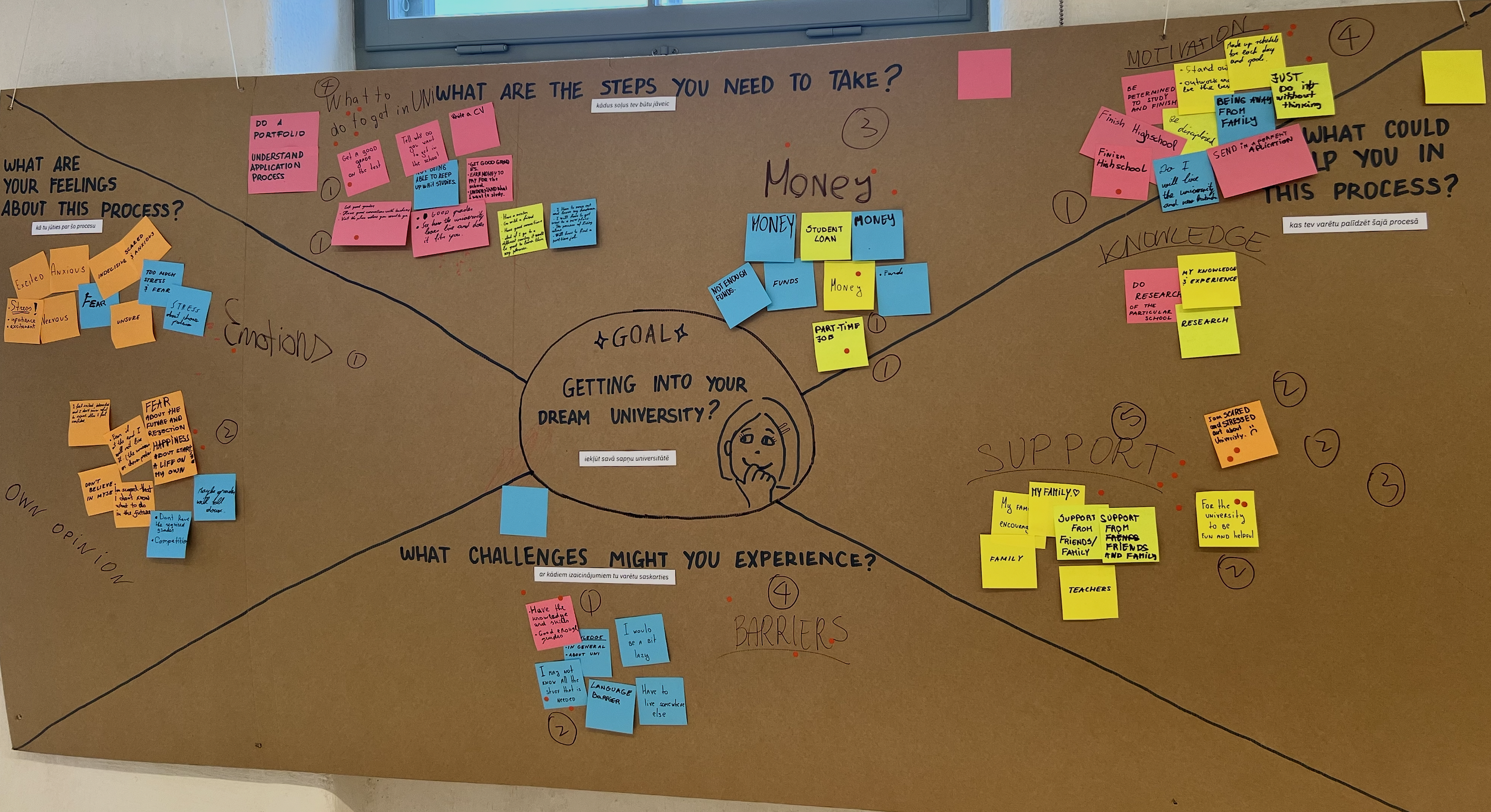
We used a series of activities (Journey Map, Empathy Map, Affinity Map, Dot Voting, Crazy 8, Make a Poster) focused on helping the students reflect on their experiences to pinpoint key challenges, which we then transformed into problem statements for them. They brainstormed solutions based on these opportunities, selecting their favorite ideas to express in a visual way through poster-making. By the end of the workshop, we had a comprehensive empathy map and a variety of creative solutions addressing the issues identified.
Our team refined our HMW statement to ‘How might we empower Kuldīga high schoolers to feel more confident about their career choice and future?’
2. Develop
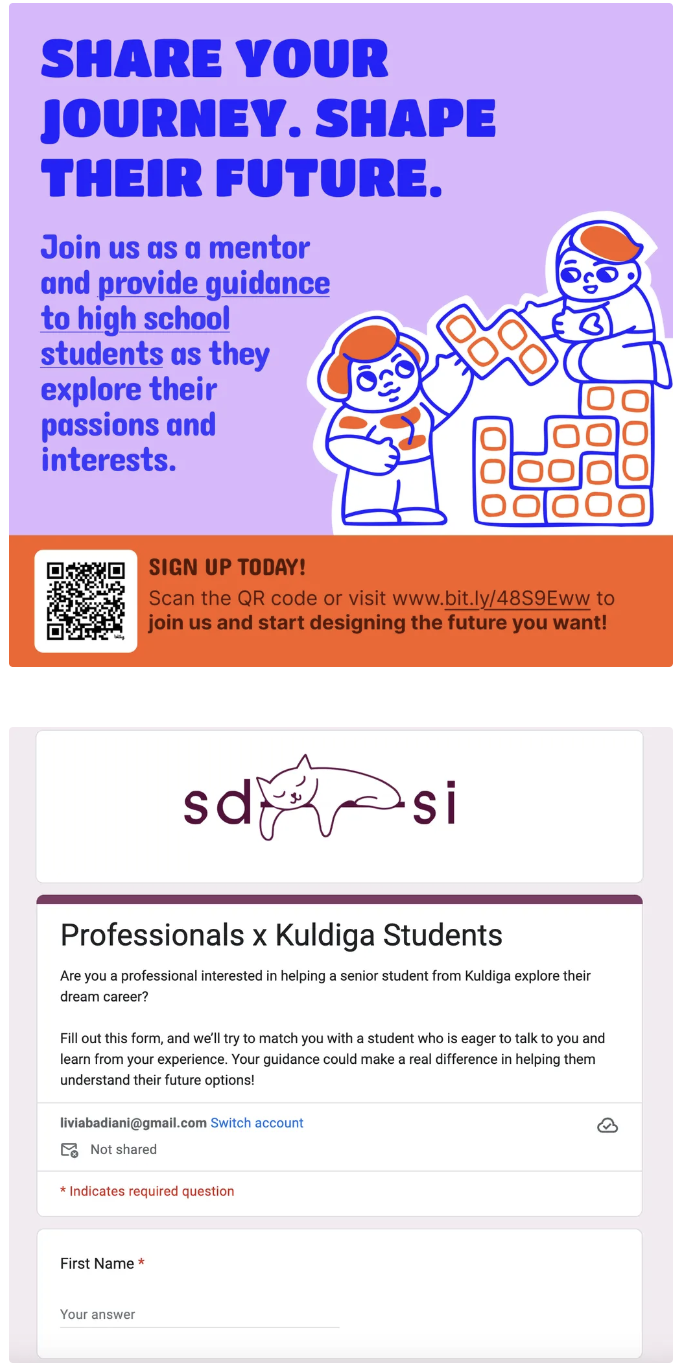
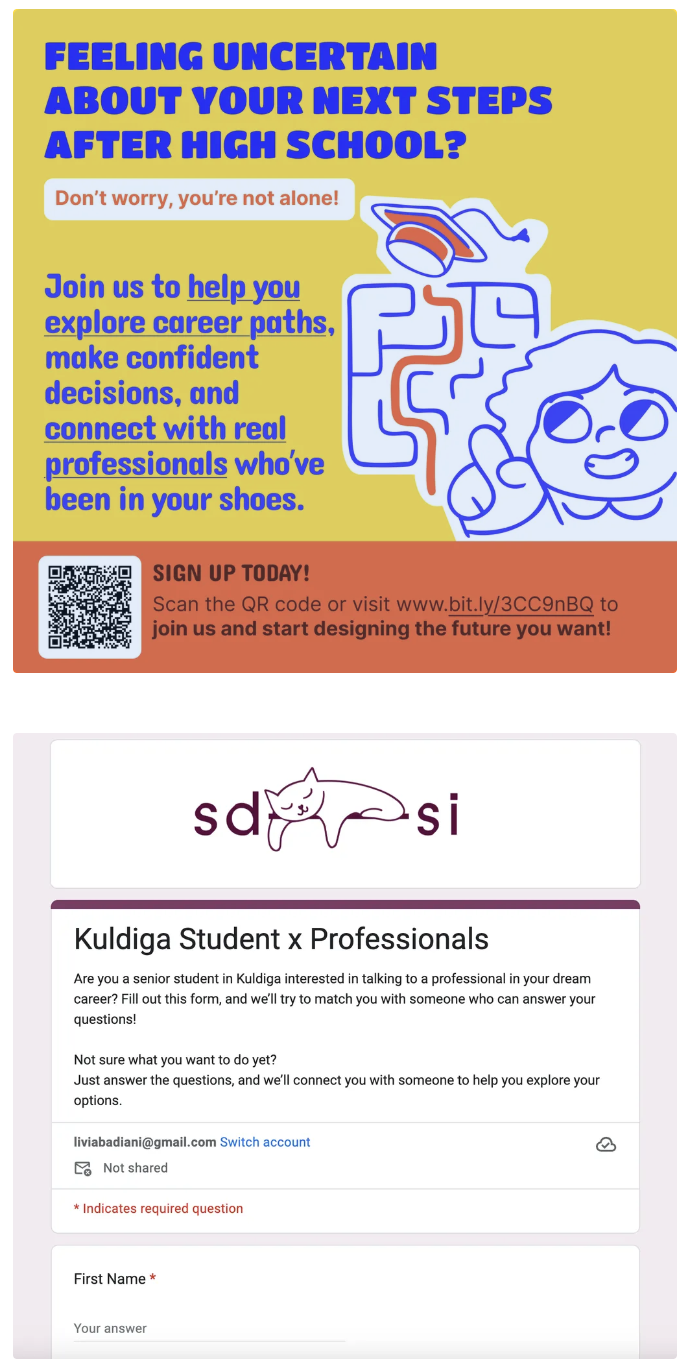
Students were clear about what they needed: GUIDANCE. They had questions about their future. ‘Is the career they’re considering the right fit?’, ‘What should they do next?’ The answers, they believed, could only come from people already working in those professions. When we reached out to professionals in the community, their response was overwhelmingly positive. They were eager to share their experiences and insights. This revealed an opportunity to bridge the gap between students seeking guidance and professionals willing to provide it, creating a platform for meaningful and career-focused connections. Among the ideas generated, I proposed Career Talks. The concept was put to a team vote and selected as our direction.
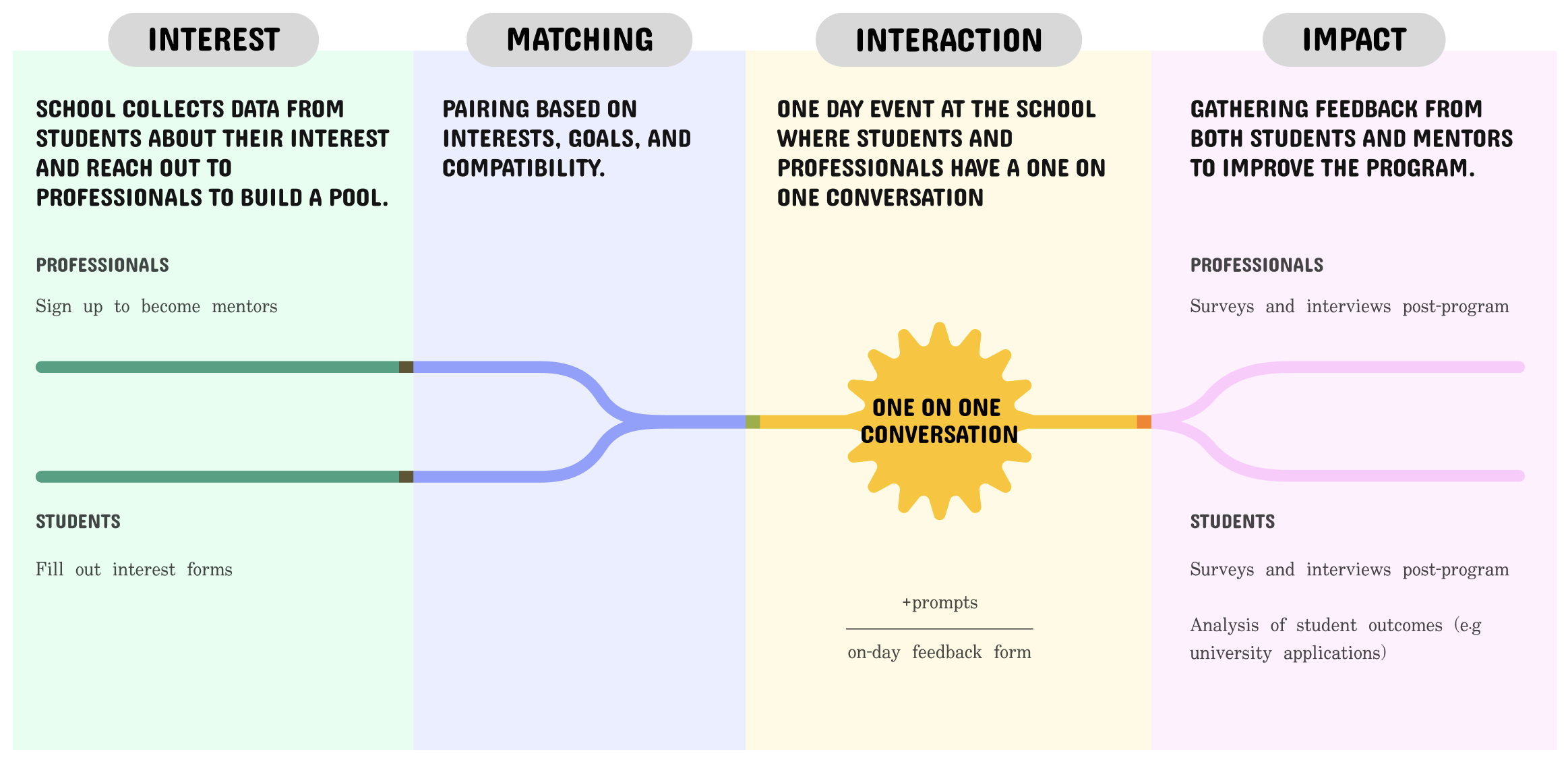
Career Talks is a one-hour event that happens in schools during Career Day. During this event, students get the chance to have one-on-one conversations with professionals working in the careers they dream about. Schools play a central role by hosting the event and coordinating with mentors and students. This framework is adaptable and can be implemented in other schools.
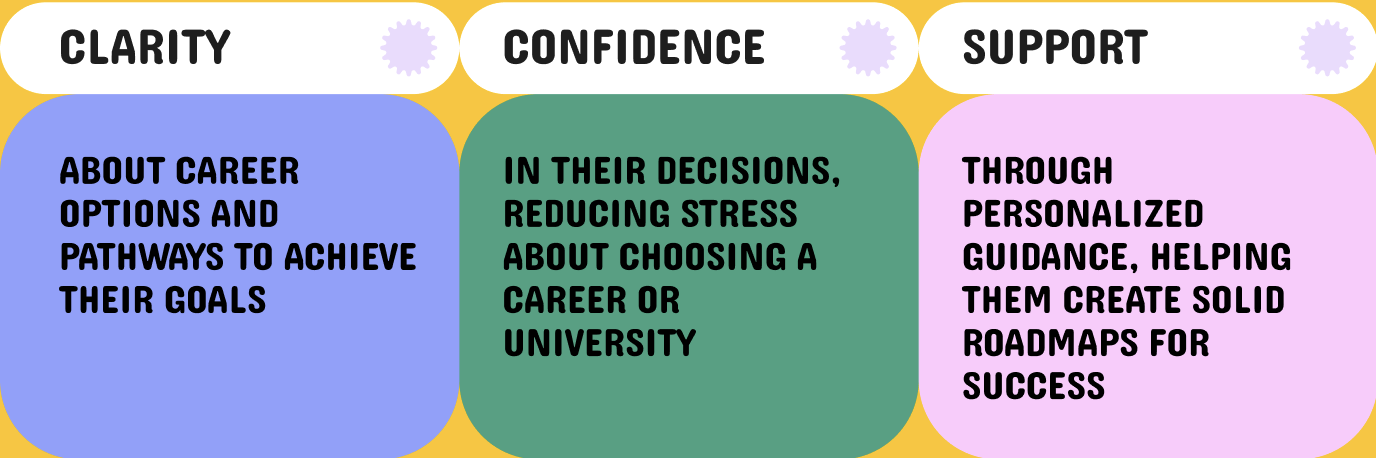
How Career Talks benefits students
How Career Talks works
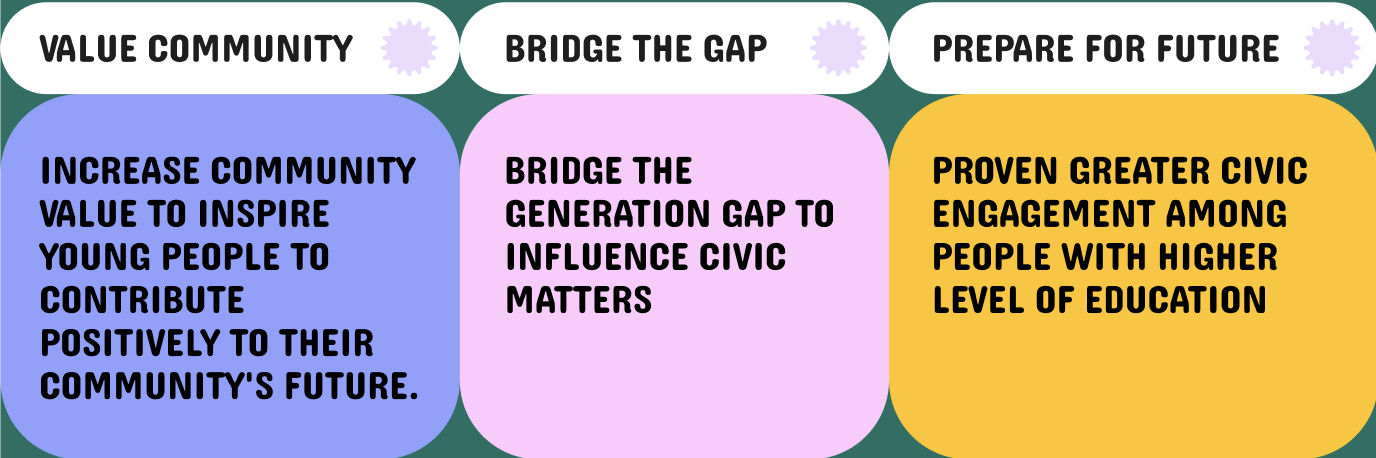
How Career Talks improves civic engagement
Prototype
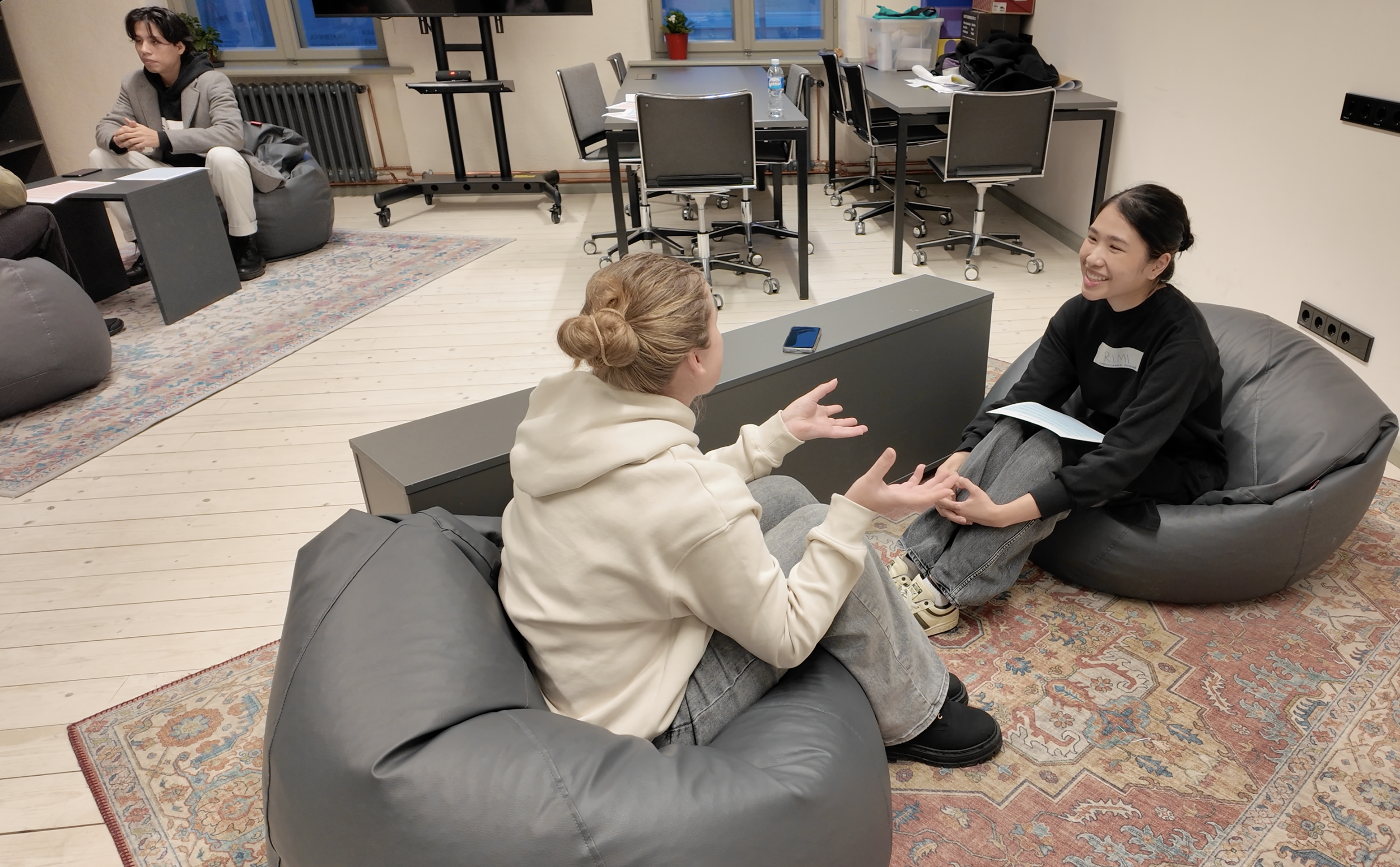
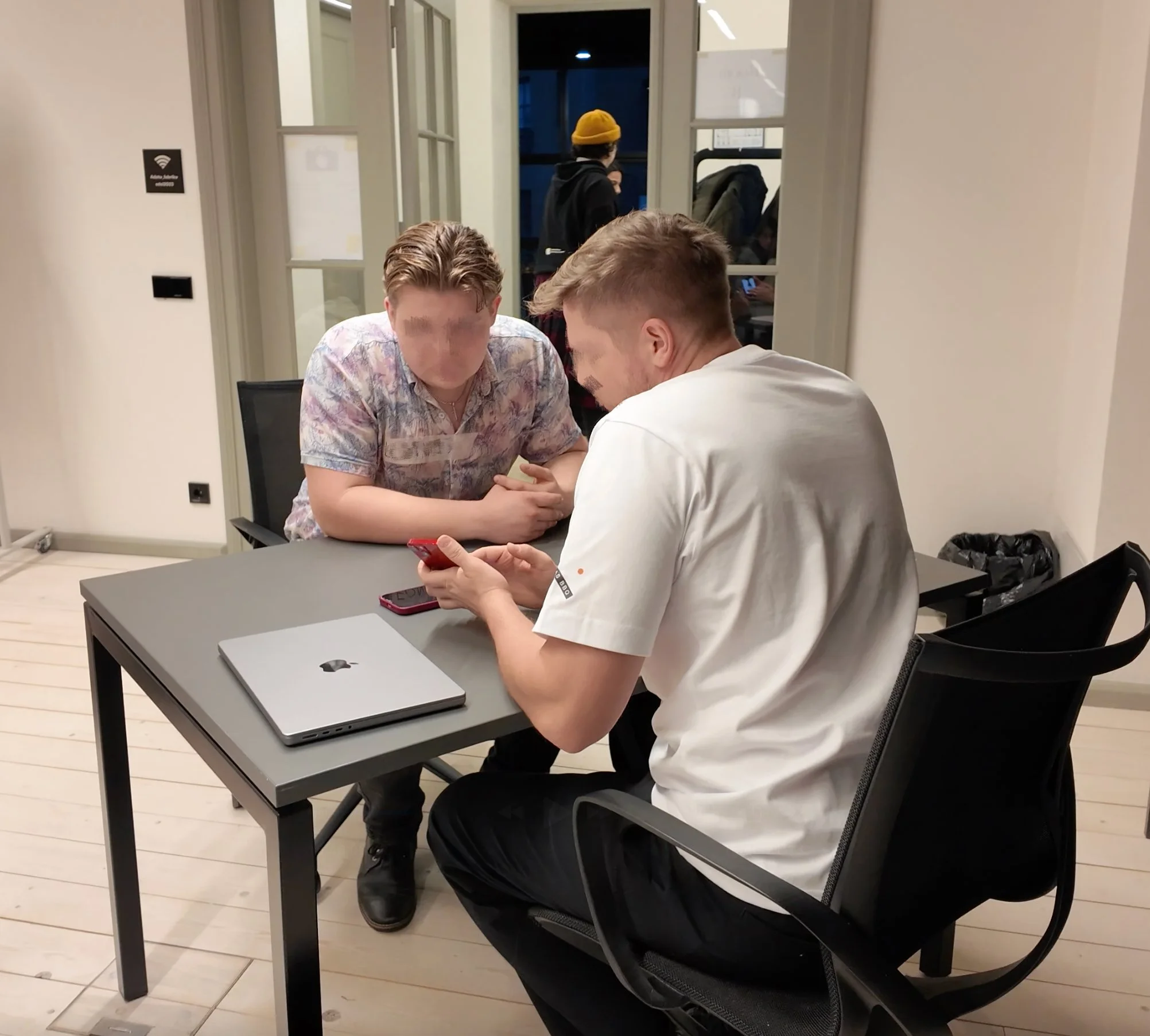
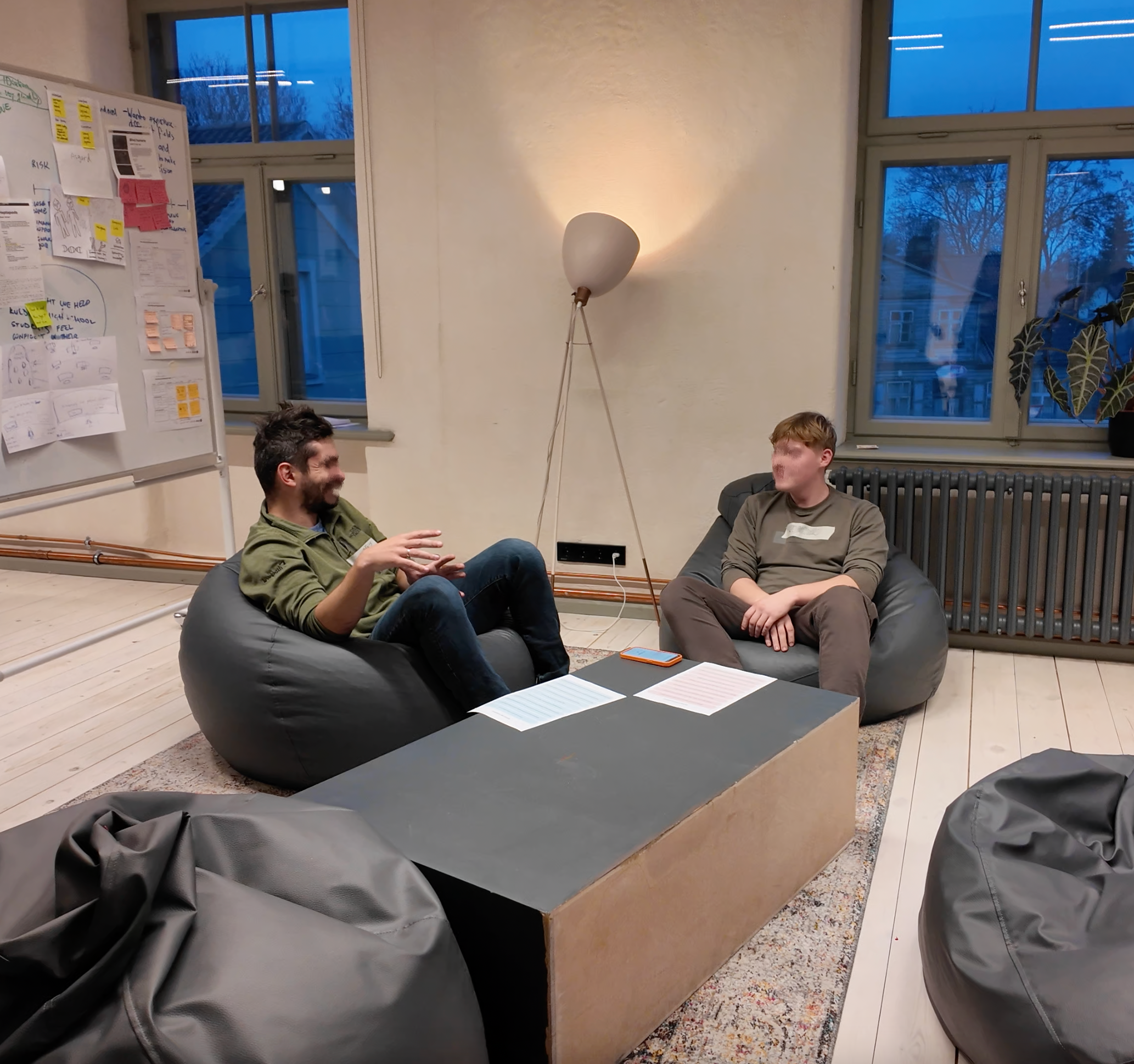
We matched four students with four professionals for one-on-one mentorship sessions, while also conducting a hands-on workshop with two additional professionals. The students came prepared with questions, and the professionals were enthusiastic about sharing their insights and experiences. The energy in the room was inspiring, with meaningful conversations exchanged throughout the event. Feedback from both students and professionals was overwhelmingly positive, reinforcing the value of this idea. Students reported feeling more clarity and confidence about their career paths, and professionals expressed a sense of fulfilment in giving back to the community.
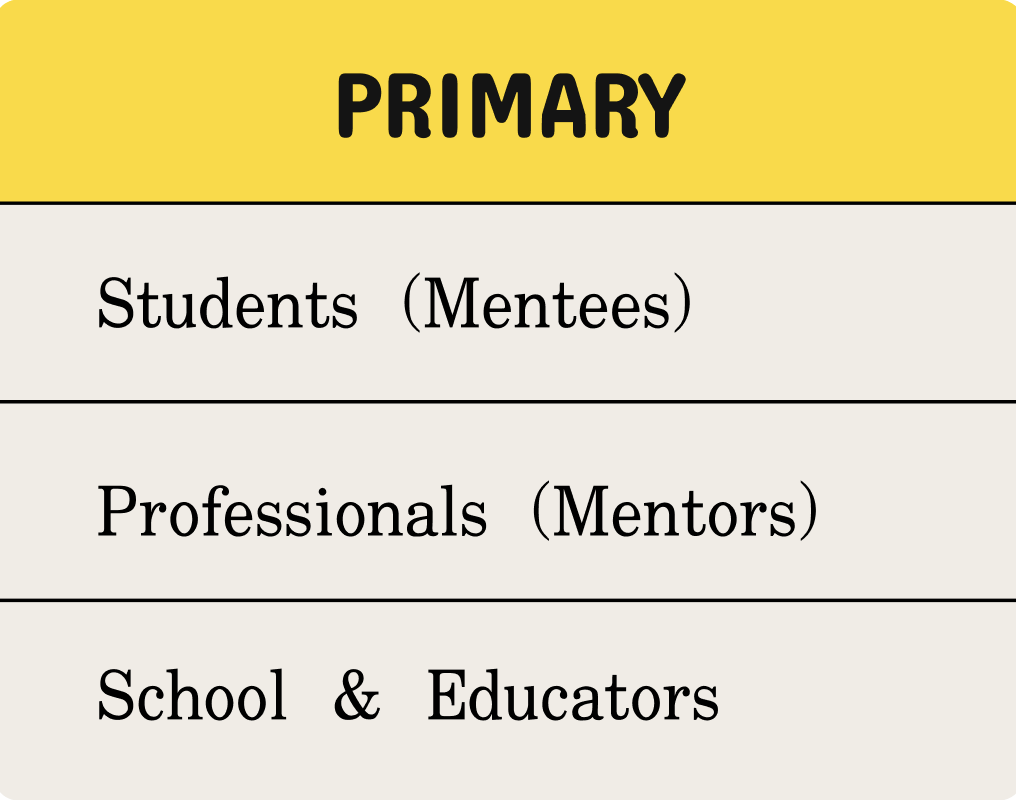
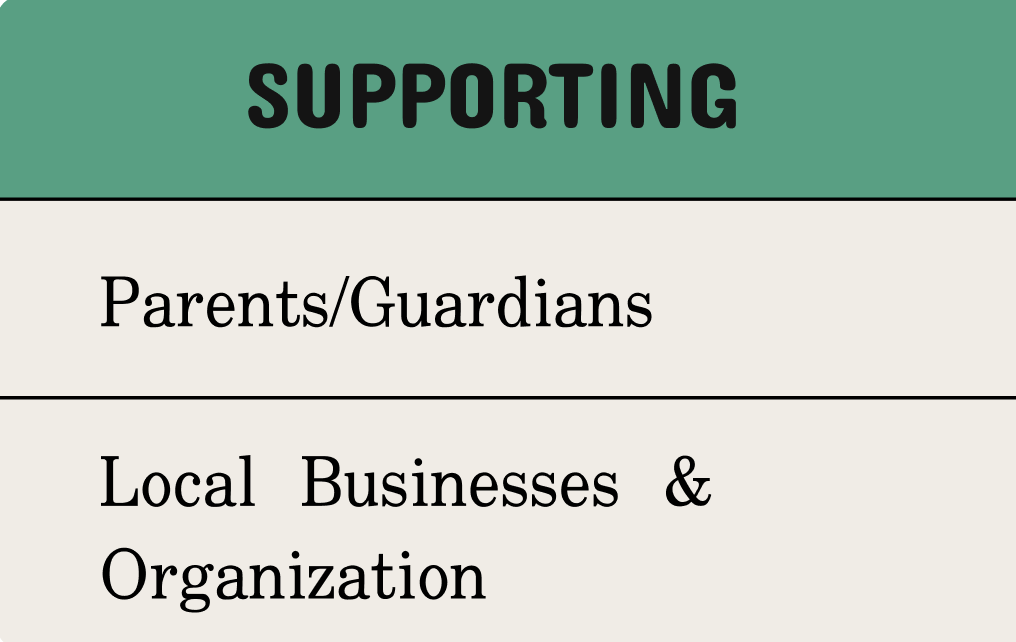
People involved
3. Deliver
We have developed a comprehensive manual designed for any school interested in adopting the program.
We also reached out to one of the principals in Kuldīga to co-create an actionable plan for integrating Career Talks into their annual Career Day, aiming to support Year 12 students in connecting with mentors and gaining valuable career guidance.
Scan the QR code below or click here to check out more about Career Talks!
Reflections & Learnings
This project taught me the importance of looking beyond surface-level problems. What began as a civic engagement brief became a deeper question about youth anxiety and aspiration, something we only uncovered by actually listening.
I contributed across the full project: from conducting interviews and facilitating the workshop, through to proposing the Career Talks concept, designing the service, and delivering the prototype with the team. We co-created an actionable plan with a school principal in Kuldīga to integrate Career Talks into their annual Career Day. Whether that implementation moved forward remains unknown. This is a reminder that handover and follow-through are as important as the design itself.